| Hydrodictyon reticulatum; newly developed (young) net with small (length ≈ 14 µm) cells (4) |
| |
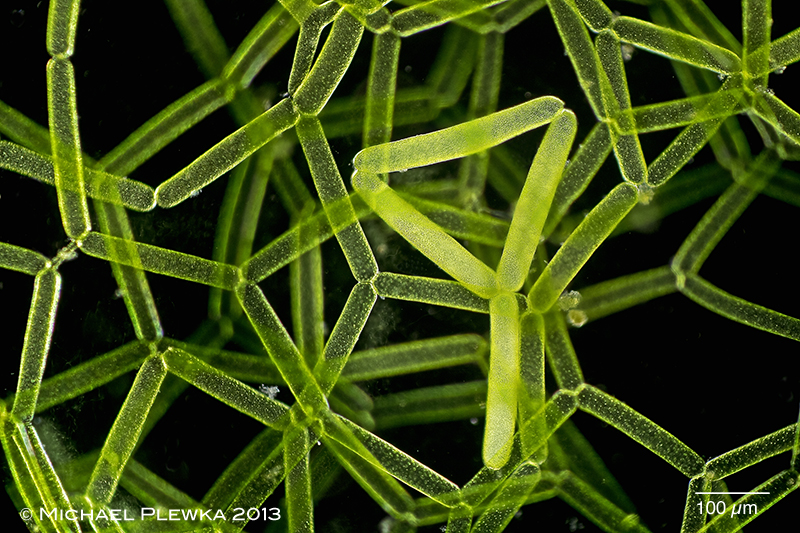 |
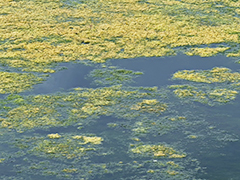
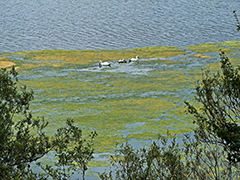
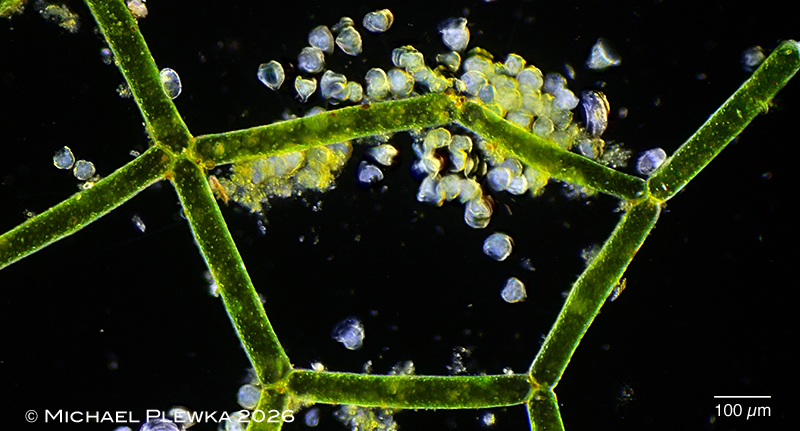
| Hydrodictyon reticulatum; coenobia of the water net can reach several decimeters; single cells are up to 2mm. The light cells contain thousands of isogametes. (1) |
| |
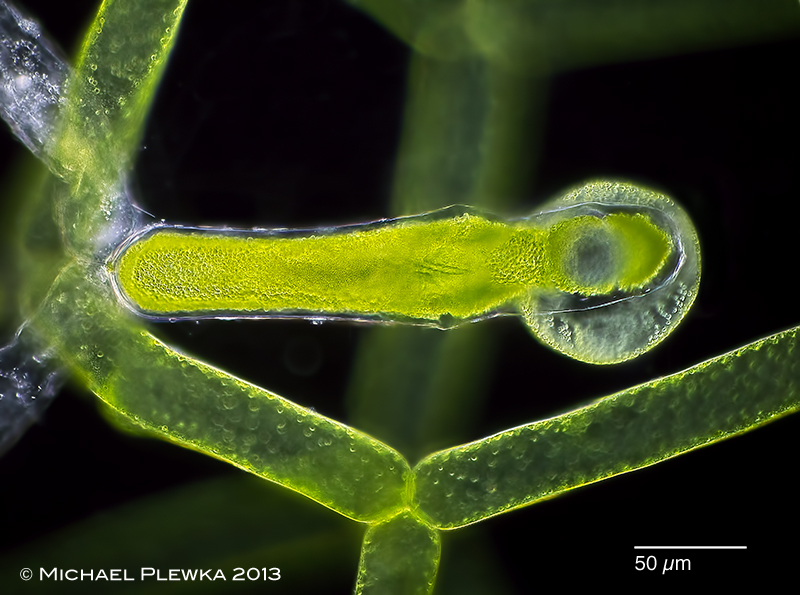 |
| Hydrodictyon reticulatum; first the cell wall becomes weak and a bubble is formed. The bubble maybe at the tip of the cell or anywhere in the middle. (1) |
| |
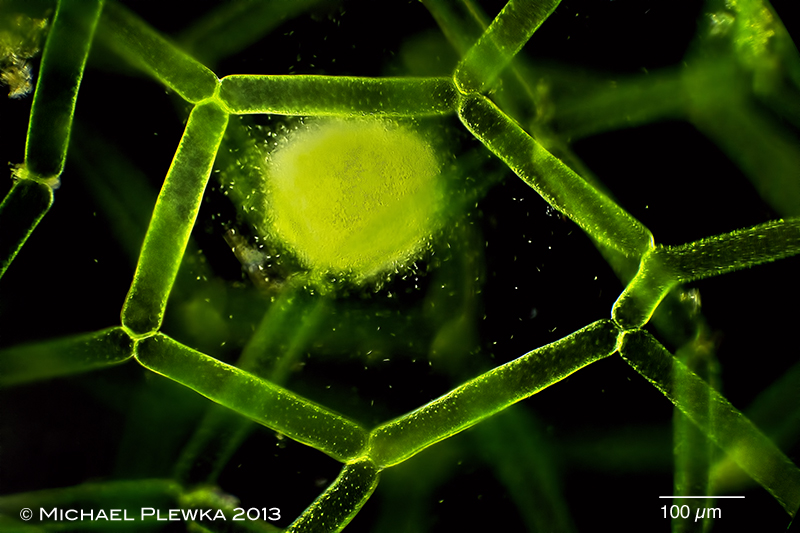 |
| Hydrodictyon reticulatum; bubble bursts and the isogametes swarm out. (1) |
| |
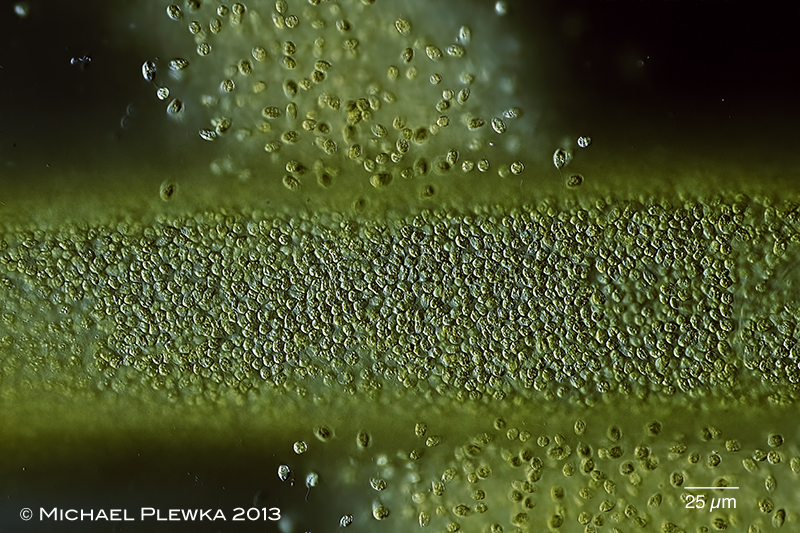 |
| Hydrodictyon reticulatum; Isogametes inside and outside of the cell. (1) |
| |
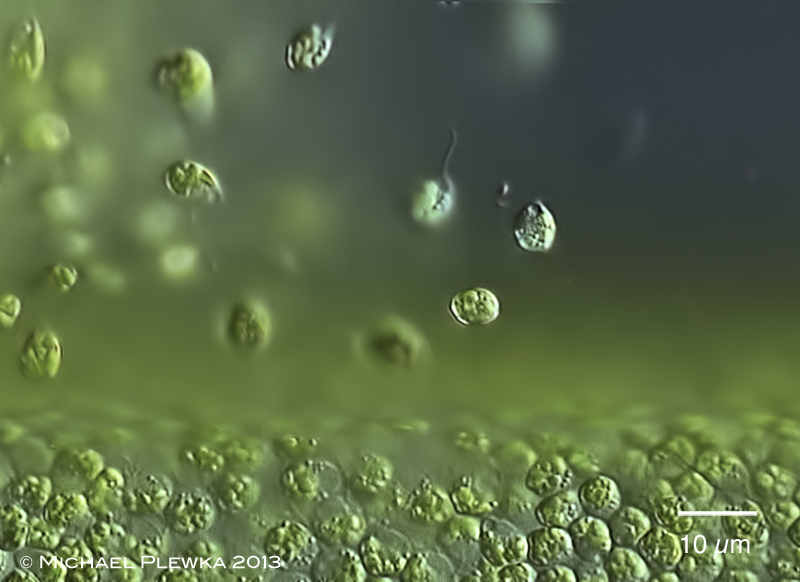 |
| Hydrodictyon reticulatum; Crop of the above image showing clearly one of the flagella in one specimen. (1) |
| |
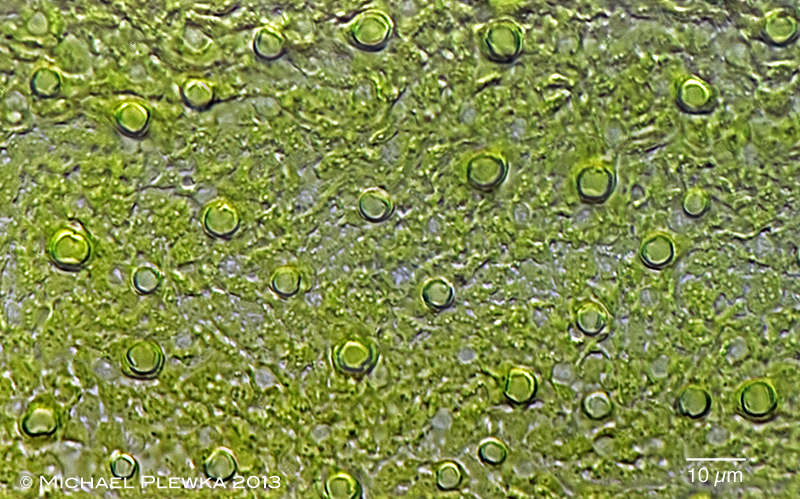 |
| Hydrodictyon reticulatum; Detail of the parietal net-like chloroplast with pyrenoids. (2) |
| |
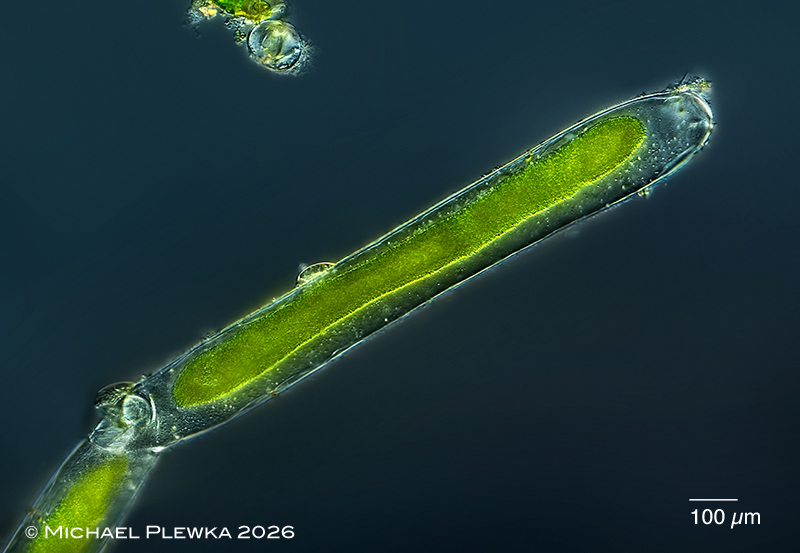 |
| Hydrodictyon reticulatum; protoplast of cell starting to produce a new coenobium. (3) |
| |
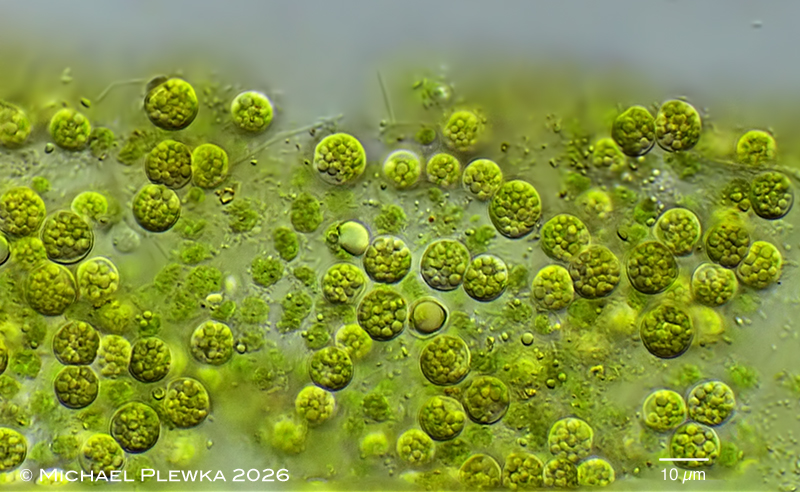 |
| Hydrodictyon reticulatum; zoospores, which later aggregate and form a new net (see below) (4) |
| |
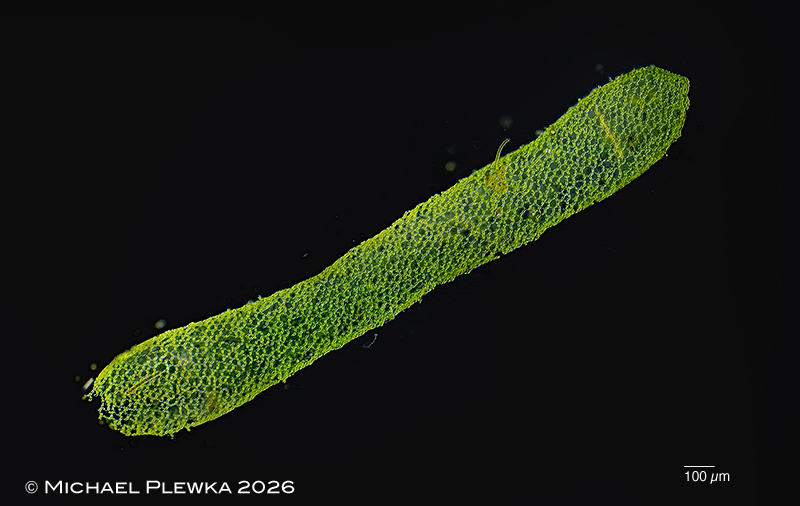 |
| Hydrodictyon reticulatum; newly developed ("young") net (4) |
| |
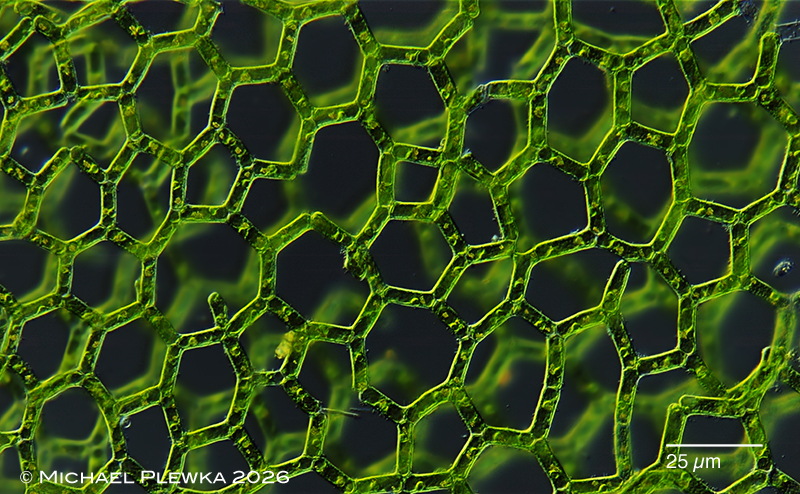 |
| Hydrodictyon reticulatum; detail of the young coenobium. These young cells have a length of ≈ 14 µm and later will grow to a length similar to the coenobium depicted above (about 2 mm) (4) |
| |
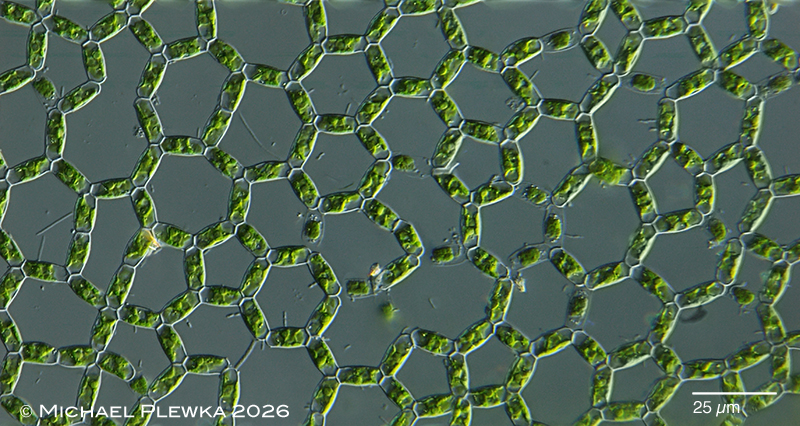 |
| Hydrodictyon reticulatum; detail of nother coenobium from location (3) |
| |
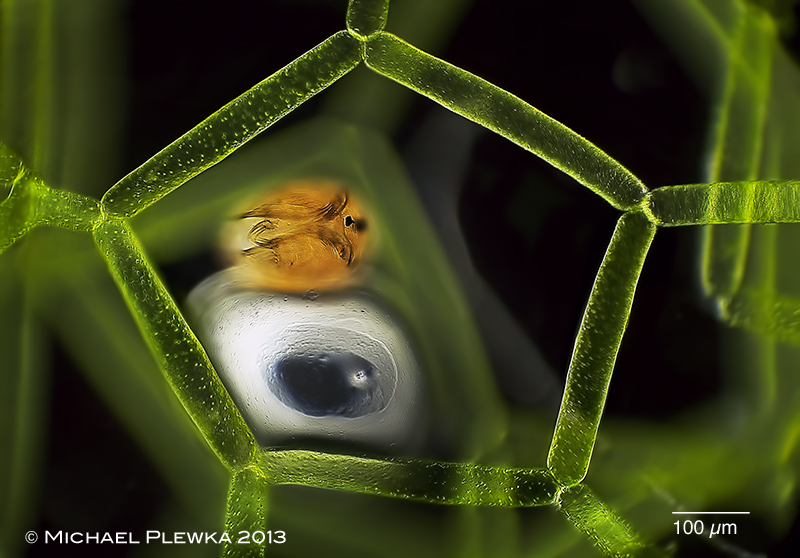 |
| Hydrodictyon reticulatum; an ostracod between the cells of the water-nes (3) |
| |
 |
| Hydrodictyon reticulatum; some peritrich ciliates as epibionts. (2) |
| |
| |
| |
|
|
| |
| |
|
|
| |
| |
|
|
| |
| |
|
|
| |
|